Overview
Teachers had to go to different places to assign different kinds of content. I pushed for a single assign button, first as self-initiated vision work, then as a hackathon concept. When Khan Academy committed to rebuilding its classroom experience, the idea became part of the rebuild, and I designed v1, which shipped to pilot schools in fall 2025.
- Role: Product designer (vision, hackathon concept, v1)
- Team: PM, engineers, researcher, design partners
- Timeline: June 2024–August 2025
- Results: Four entry points unified into one, shipped in time for the 2025 school year
Problem
Khan Academy started as a site for independent learners. Then we added teacher tools on top of that, then district tools, then AI.
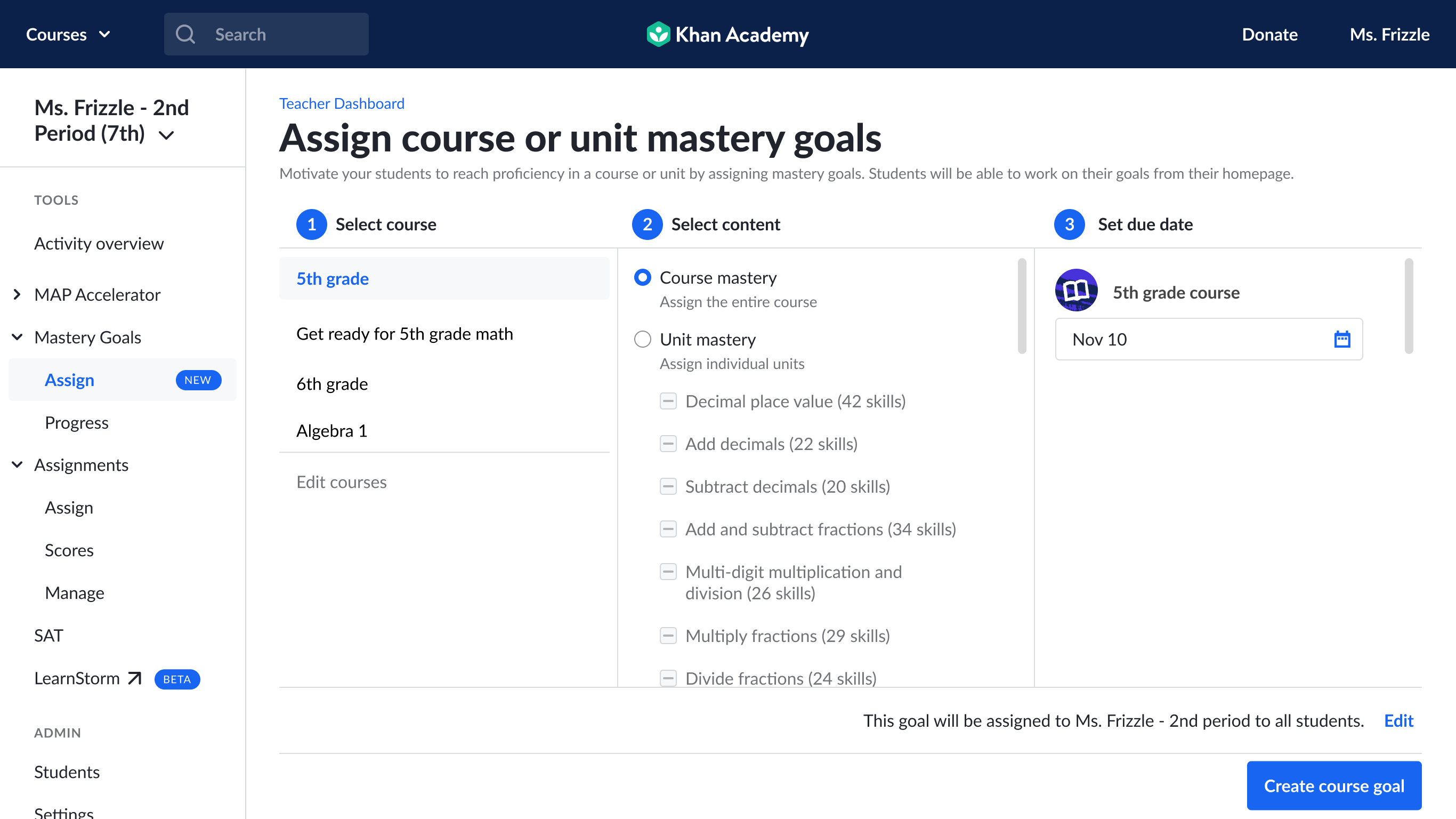
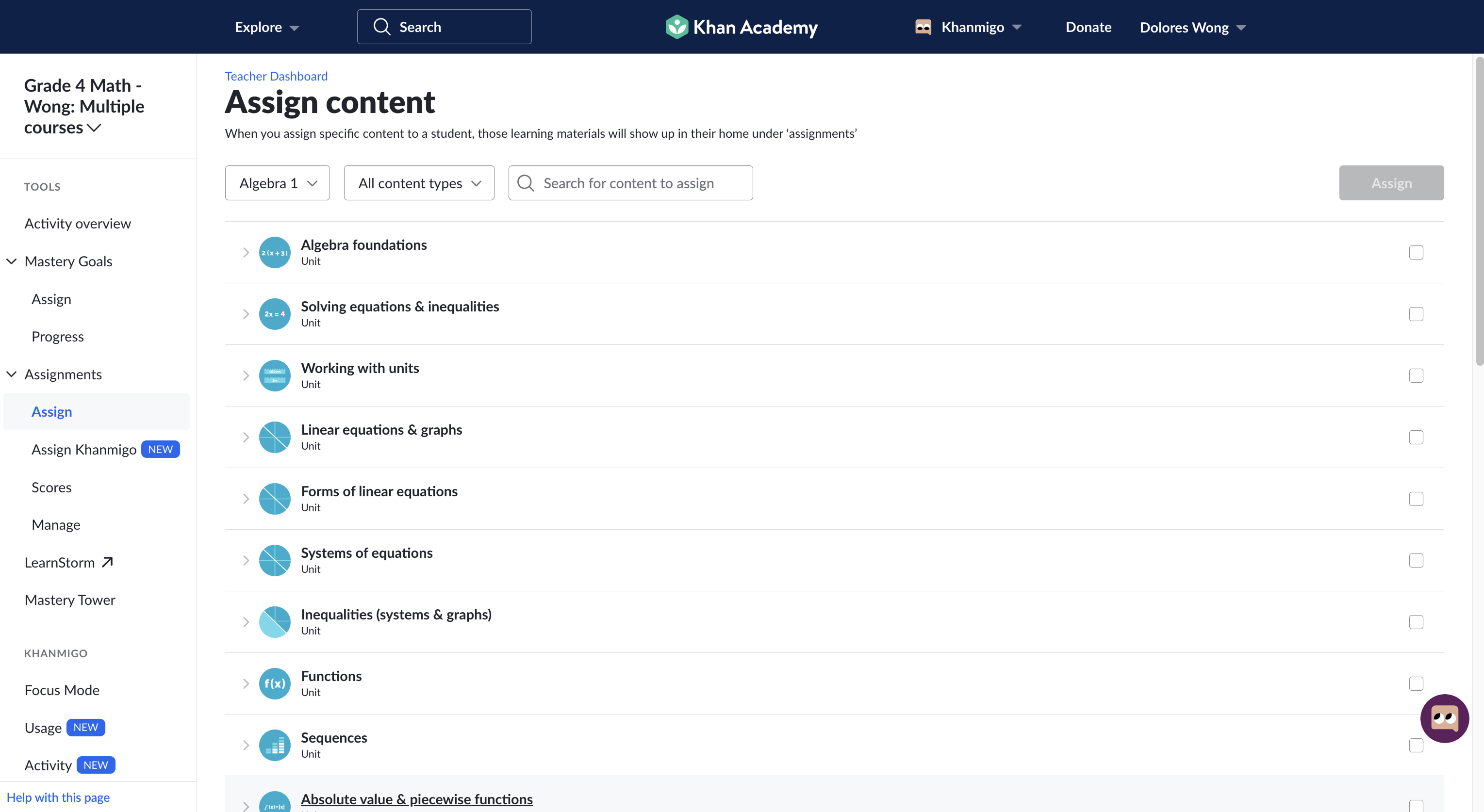
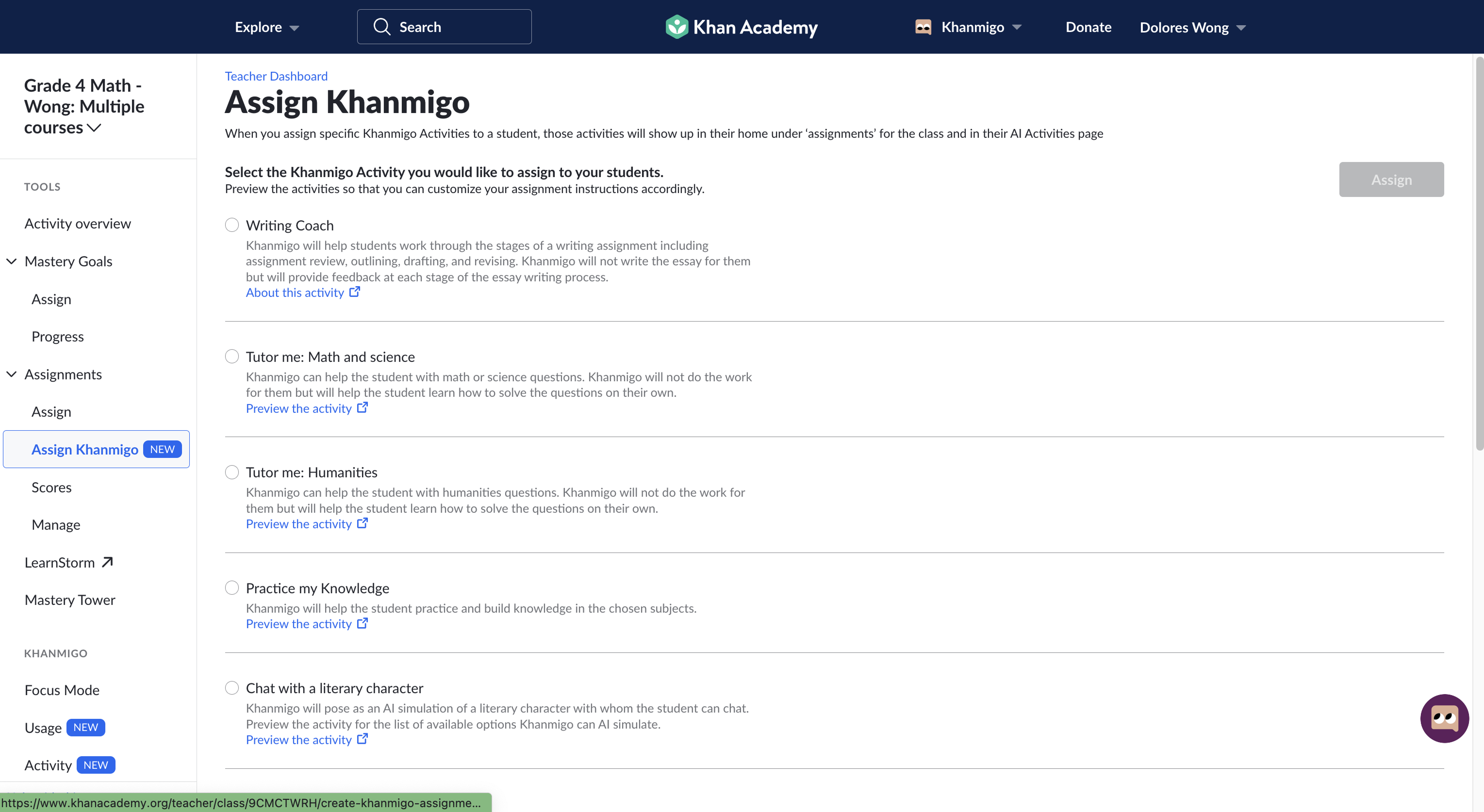
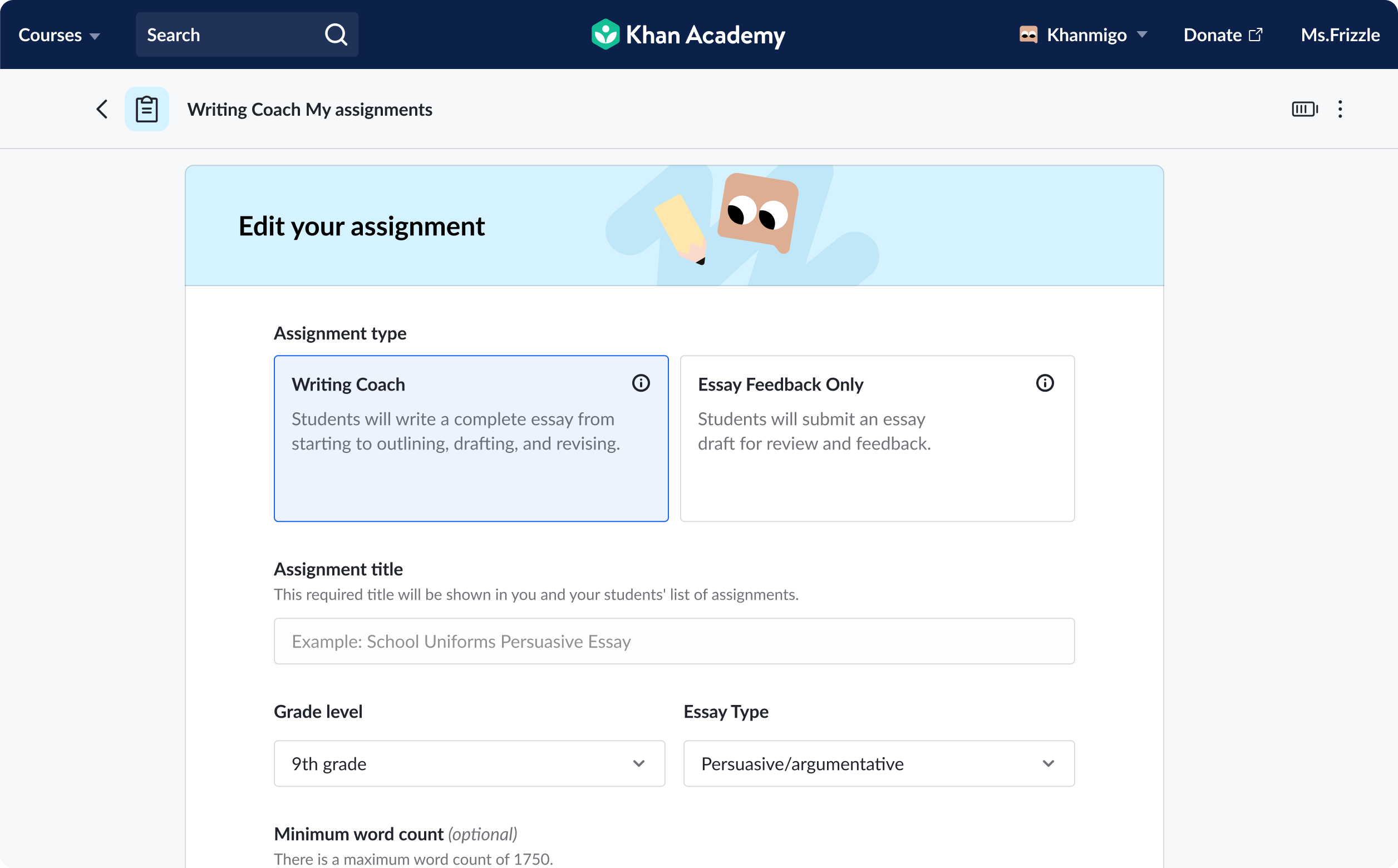
For teachers, that meant a unit mastery goal, a content assignment, a Khanmigo AI activity, and a Writing Coach essay each had to be assigned from a different place. A teacher had to know what kind of thing they were assigning before they could figure out where to go. Some tools were so buried that teachers didn’t know they existed.
Why it mattered: Assigning is how teachers deliver Khan Academy content to their students. The pilot later showed it was also where learning happened. Students with assigned mastery goals learned substantially more than students without them.
If assigning is hard, teachers assign less, and students learn less.
Seeing the problem before it was on the roadmap (summer 2024)
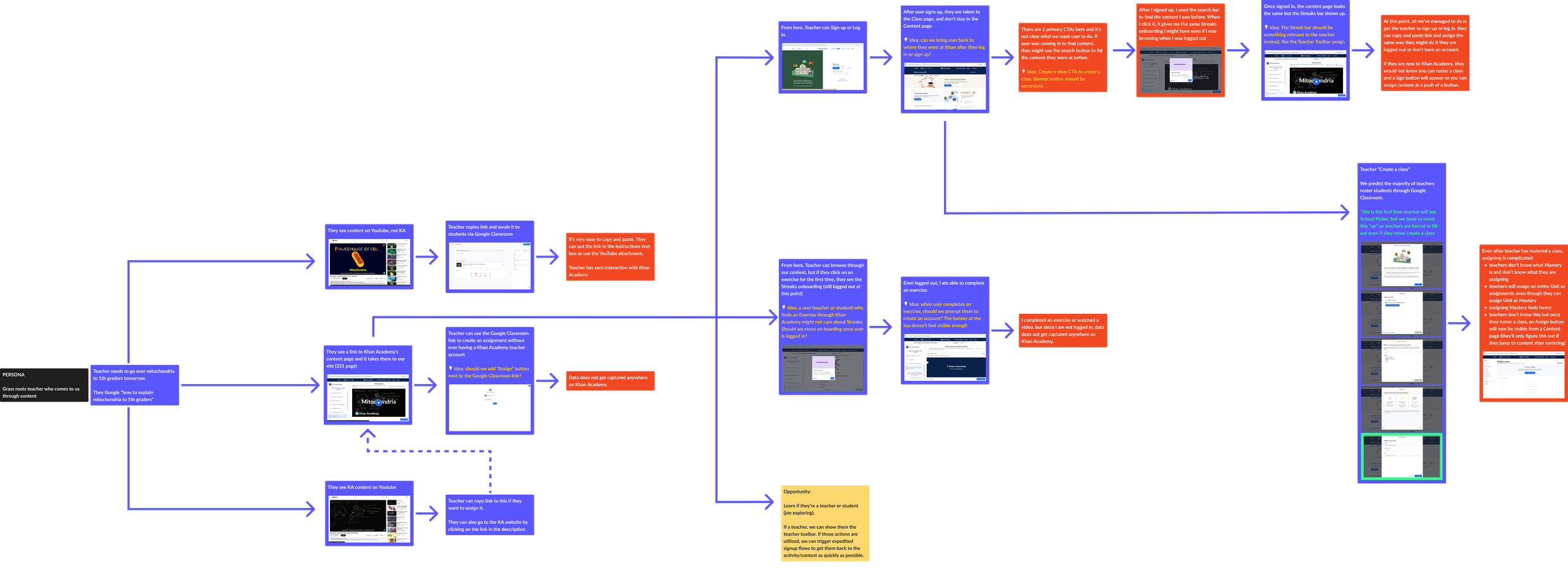
Teachers couldn’t find where to assign things. I kept hearing it in teacher research, from our professional learning team, and even from new hires learning the site for the first time. It still wasn’t on the roadmap.
So I pulled in two other designers for a few hours a week. We audited the teacher experience end to end and gathered pain points from past research decks and team Slack threads into one picture.
Two findings stood out:
- Teachers had two separate Assign tabs, one for mastery goals and one for content assignments, and nothing told them the difference or why mastery goals mattered more. Khanmigo activities and Writing Coach essays each lived somewhere else entirely.
- Many teachers skipped setting up a class altogether because sending students a link to the content was faster. This was a problem because without a class, teachers can’t see student progress over time.
Both came down to effort. When assigning is confusing or slow, teachers find a workaround or don’t assign at all.
When I shared the audit with the teacher and design teams, it landed. Everyone recognized the problem, and people were excited about finally fixing it.
If we want teachers to assign more, assigning has to be the easiest thing to do in the product.
Making the case at a hackathon (fall 2024)
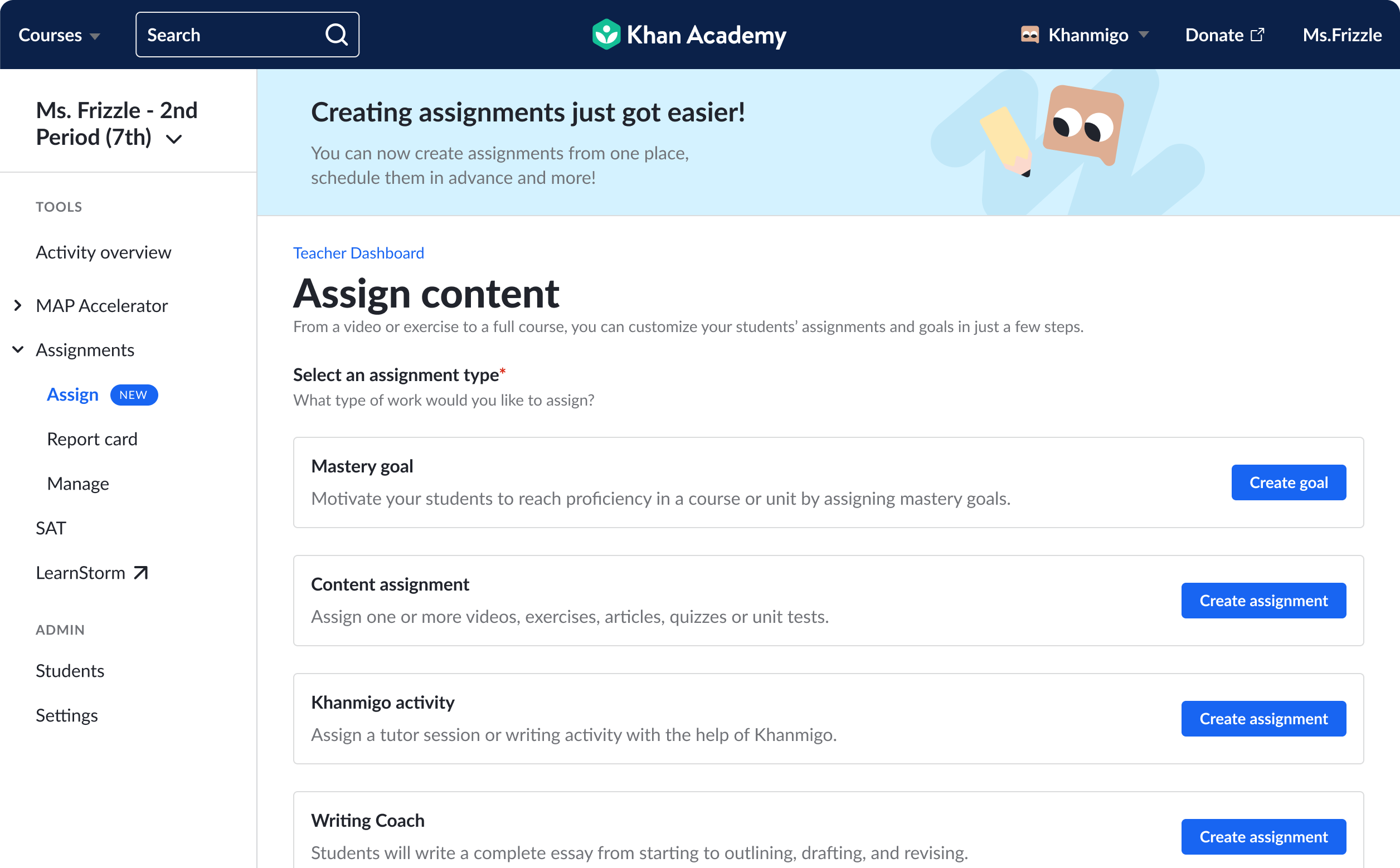
Agreement alone didn’t put the single assign button on the roadmap, so I used our October hackathon to make it real. I designed a first pass that pulled every assignable item behind one entry point.
Two months later, leadership committed to rebuilding the classroom experience across several teams, with a goal of turning scattered teacher tools into one connected product. Because of my audit and hackathon work, I was asked to lead design for the Assignments page. I brought my hackathon concept in as our starting point, and the single entry point became the v1 direction.
Designing v1 (2025)
Before v1, I interviewed five colleagues who were former teachers. Most agreed that when they used to assign work, they chose the topic before the format, so I mapped a topic-first guided flow around that.
I pitched a full revamp of our assigning flow that would meet teachers where they are instead of making them learn how our system was built.
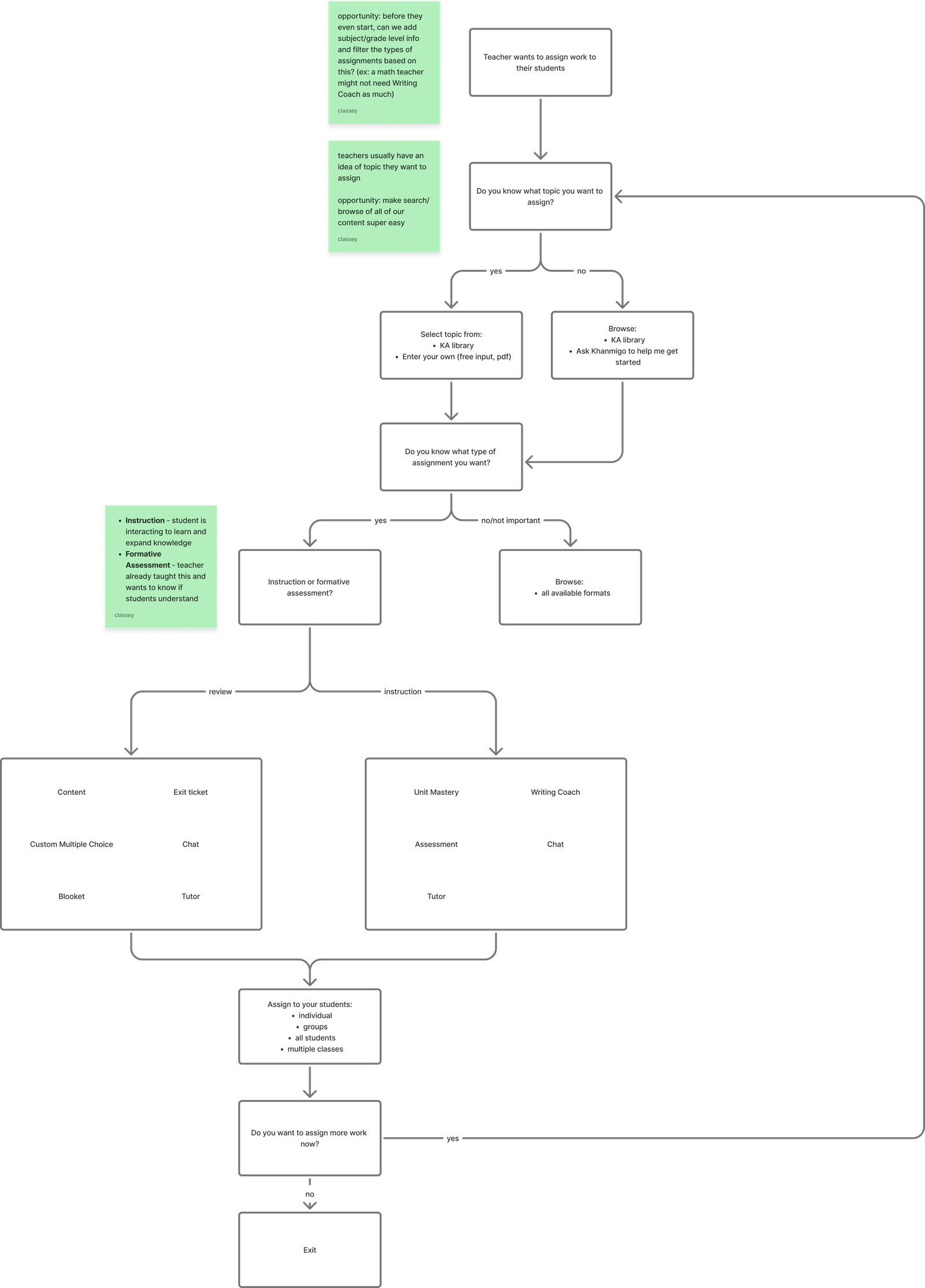
With a tight turnaround before back-to-school, however, we couldn’t overhaul the whole experience. Instead, v1 kept the core of the vision: teachers should start in one place and shouldn’t need to know how our system works to get there.
Within those limits, I focused on two decisions.
- Put every type of assignment up front, behind one button. Mastery, content, Khanmigo, and Writing Coach assignments all started from the same menu on the Assignments page, instead of a different spot for each type. That solved where teachers start without rebuilding the flows behind it, and research showed teachers found it clear where to go. The cost was that each button still led to its own old flow, so teachers had to learn a different process for each assignment type.
- Explain each option in one line. Labels like “Assign unit missions” (mastery goals) and “Assign Khanmigo activity” don’t explain themselves to a new teacher, so I carried over the one-line descriptions from my hackathon concept. It got strong positive feedback from colleagues and from the former teachers who tested it. It was also the first time the product itself explained the difference between mastery and individual content, instead of leaving that to training sessions or how-to videos.
What happened next
The rebuild had an explicit rule to redesign the experience but keep proven underlying pieces unless they truly couldn’t work. With a back-to-school pilot deadline, we unified the entry point but didn’t rebuild every flow behind it.
That got us to the pilot on time and fixed the most visible problem, which was teachers not knowing where to go.
But the old flows continued to be a pain point for teachers. Each assignment type still worked differently, and nothing showed teachers why assigning mastery is more beneficial for student learning than assigning individual content.
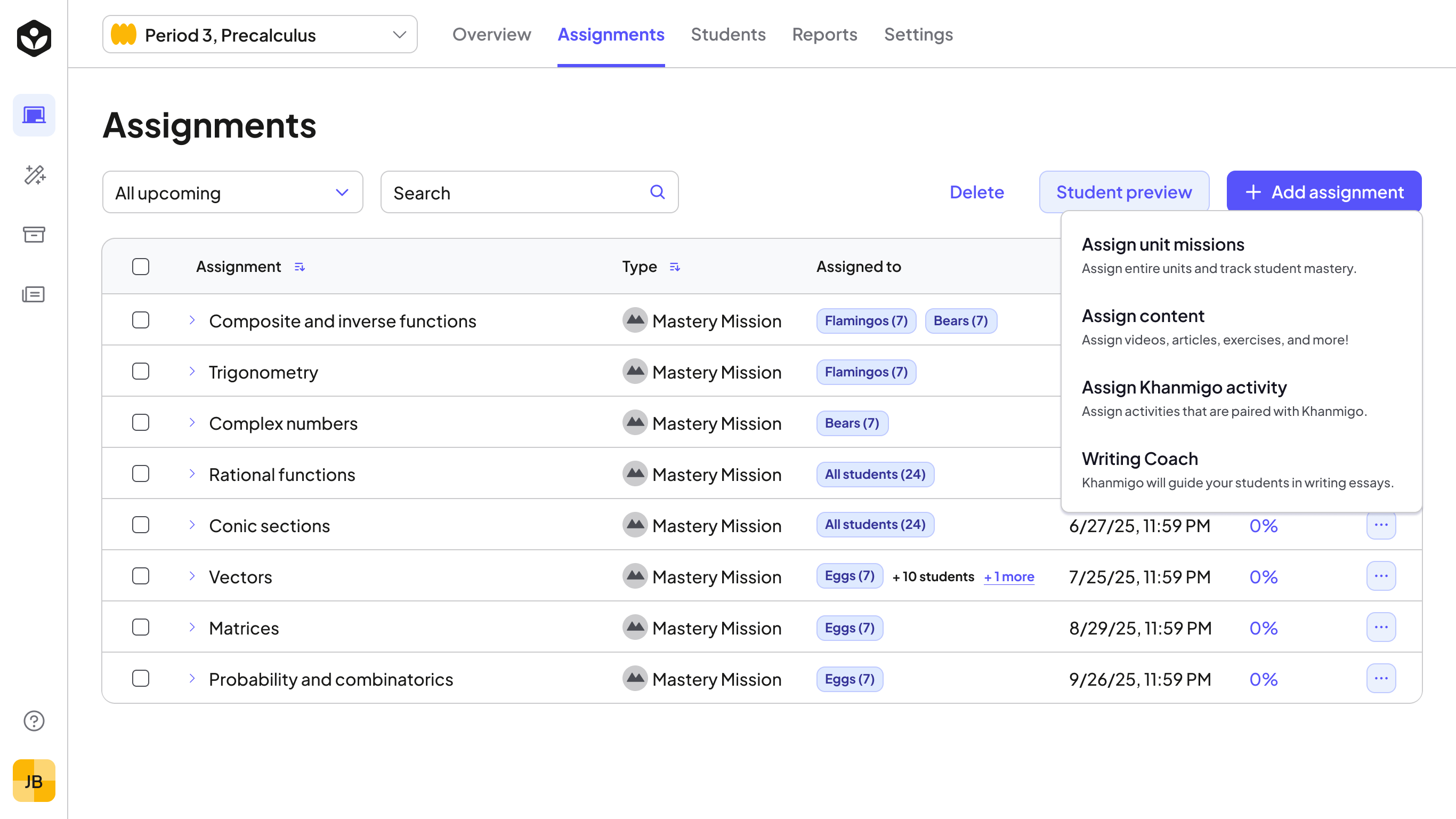
After the pilot, the company narrowed its strategy to mastery-based practice and deprioritized standalone Khanmigo assignments. The team cut the menu from four options to two (Assign content and Writing Coach) and redesigned the assignment list.
The single entry point from v1 stayed.
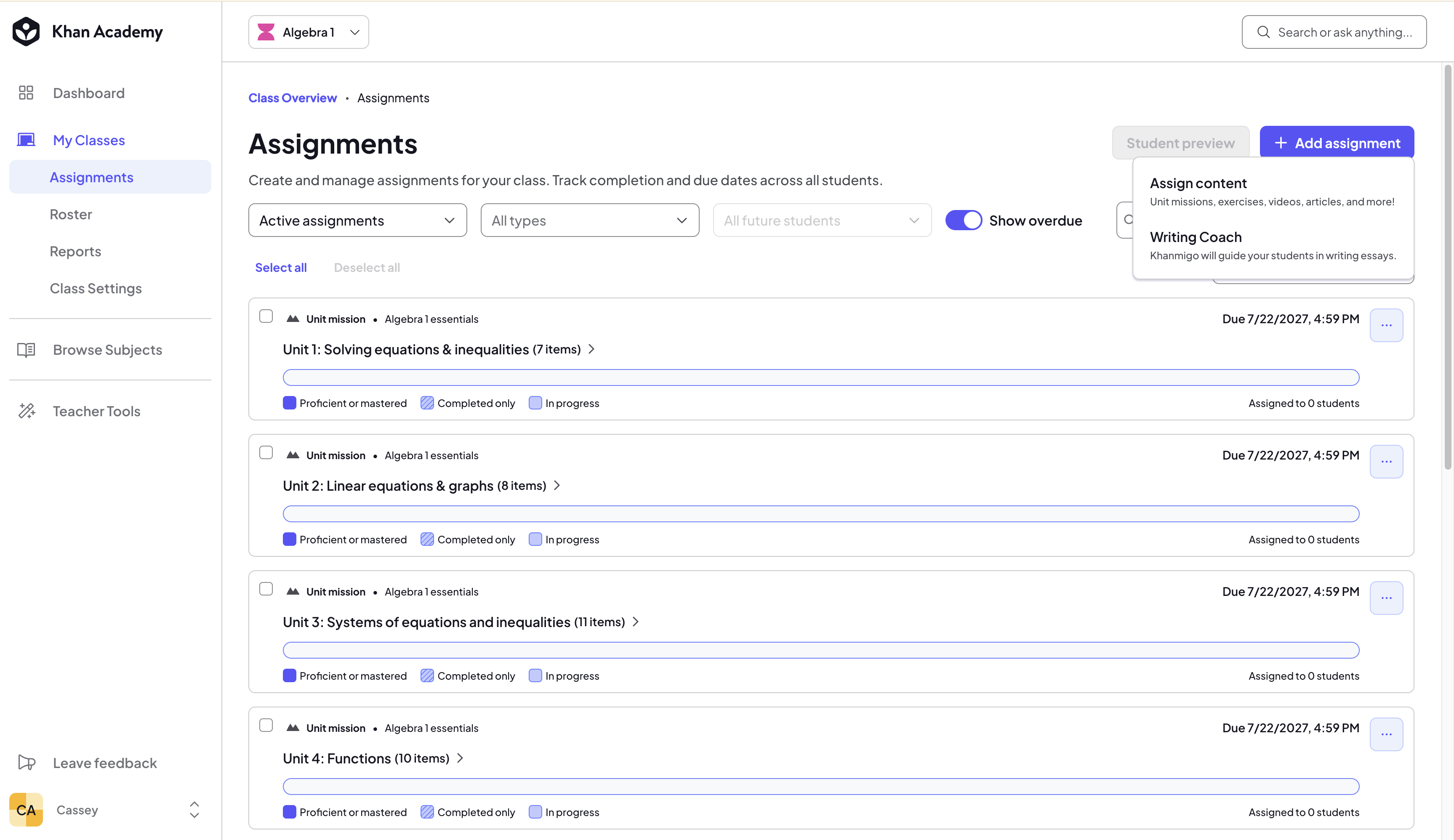
Right: today’s experience, with an updated assignments list and the menu cut to two.
What I learned
In 2024, before it was on any roadmap, I bet that assigning had to be the easiest thing a teacher can do on Khan Academy. The pilot backed it up.
v1 made assigning easy to find but not easy to finish.
v1 was organized around how our system was built, not around how teachers actually work in the classroom. The four options were easier to find, but they were still a record of our history. Each one was a feature we’d added as the company grew: mastery, then individual content, then Khanmigo when AI arrived, then Writing Coach as we invested in ELA.
Realistically, products are built one feature at a time as companies grow and learn from feedback. Part of my job is noticing when all those additions start to become the user’s problem and making the case to stop building and rethink the experience as a whole. But on a deadline, a full rethink is a hard sell. Now I zero in on the one flow that matters most (in this case, mastery) and make it as easy as possible, so users get what they need in v1.